

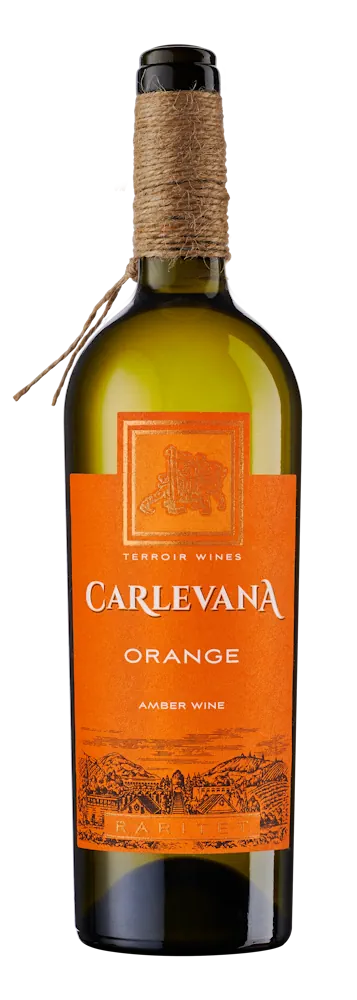
Orange wine is one of the most intriguing and trending wine styles of recent years. Despite its apparent novelty, the production technique has ancient roots. Today, this type of wine is produced all over the world — including in Moldova, where wineries such as Carlevana Winery create outstanding examples.
What is Orange Wine
Orange wine is made from white grapes but by using a red-wine method. After harvesting, the grapes are not separated from their skins — instead, they are left to macerate for days or even months. This skin contact gives the wine its amber-orange hue, expressive aroma, and rich structure.
The result is a wine that combines the freshness of a white with the body and tannins of a red. Its taste is intense, often revealing notes of citrus peel, dried fruits, honey, and spices.
Production technology
The production of orange wine is simple in concept but requires patience and precision:
- Harvesting and crushing. Typically, white grape varieties such as Rkatsiteli, Sauvignon Blanc, or Fetească Albă are used.
- Maceration. The crushed grapes remain in contact with their skins for days or weeks — the longer the contact, the deeper the color and flavor.
- Fermentation. The must ferments naturally in clay amphorae (qvevri), wooden barrels, or concrete tanks, sometimes without added yeast.
- Aging. After pressing, the wine is aged in vessels, amphorae, or oak barrels, gaining softness and balance.
It is precisely this prolonged maceration that distinguishes orange wine from classic white wines, where the skins are removed immediately.
Historical background
The story of orange wine goes back thousands of years. The earliest examples come from the Caucasus — specifically Georgia, where such wines were made 5–8 thousand years ago. They were fermented in large clay vessels called qvevri, buried underground to maintain a stable temperature.
Later, this practice spread to Italy, Slovenia, and Austria. By the mid-20th century, however, the method had almost disappeared, replaced by modern white-wine technologies.
The revival of orange wine began in the early 2000s, when European winemakers rediscovered the Georgian tradition. Since then, orange wine has become a symbol of natural winemaking and minimal intervention.
Moldovan wine and Carlevana Winery
Modern Moldovan wine producers are embracing the orange wine trend. The country’s favorable climate and diverse terroirs are ideal for this ancient yet revived style.
Carlevana Winery stands out as a pioneer in Moldova, combining traditional maceration techniques with modern precision. Their orange wines are known for their purity, balance, and expressive aromas — with notes of citrus peel, tea-like tannins, and a smooth, lingering finish.
Raritet Orange from Carlevana Winery reflects the harmony between history and innovation, proving that orange wine can be both authentic and contemporary.
Famous Orange Wine brands
There are many remarkable examples of orange wines around the world:
- PÉPIN (Alsace, France) — fruity and spicy, with a pleasant acidity.
- VIGNOBLES VELLAS (France) — a natural, sulfur-free wine with aromas of apricot and spice.
- FIGUIÈRE #3 Orange (France) — made from Vermentino, showing apricot, mandarin, and floral notes.
- Giorgio Colutta (Italy) — a perfect balance of fruit and tannins.
- Movia (Slovenia) — one of the iconic European orange wines.
Moldovan producers, including Carlevana Winery, confidently stand among these respected names, demonstrating both quality and originality.
Conclusion
Orange wine is more than just a drink — it’s a bridge between past and present. From ancient Georgian qvevri to modern Moldovan cellars, the tradition continues to inspire new generations of winemakers.
Try orange wine from Carlevana Winery and discover a unique style—bright, expressive, and surprisingly harmonious, a symbol of modern Moldovan wine with deep historical roots—on our wine tour with tasting.
